

It is almost always late when it happens. The house is quiet, the air conditioner is humming, and then something changes. A light fixture flickers and won’t stop. A faint smell drifts out of the hallway. A breaker snaps off and refuses to stay on. In that moment, most people face the same question: call someone now, or wait until morning?
That question matters more than it seems. Electrical problems rarely announce how serious they are. A buzzing outlet can be a loose plate screw or a connection slowly cooking inside the wall. Houston adds its own pressures. Long cooling seasons, heavy storms and a large stock of homes built decades ago all put strain on wiring that was designed for a lighter load.
Knowing which situations truly can’t wait helps families avoid two mistakes: ignoring real danger and paying after hours rates for something that could have been handled next week. When a problem does call for emergency service in Houston, a licensed contractor that handles outage calls, troubleshooting and damaged panel replacement is the right first contact. Until then, the scenarios below show how to read the warning signs.
Why Nighttime Problems Deserve Extra Attention
There is a practical reason to treat late night electrical issues seriously. The U.S. Fire Administration notes in its electrical fire safety fact sheet that home electrical fire deaths peak between midnight and 8 a.m., and that about half of home electrical fires involve wiring or lighting equipment. Those are the hours when people are asleep and least likely to notice smoke early. A problem that seems minor at 11 p.m. has the whole night to grow.
Scenario One: A Burning or Fishy Smell With No Obvious Source
A smell like hot plastic, or oddly like fish, often means insulation or a device is overheating. It is one of the most important warnings a home can give, and it should not wait.
If you can find the source, such as a particular outlet, switch or fixture, turn off that circuit at the panel. If the smell is spreading, you see smoke or you can’t trace it, get everyone outside and call 911 first. An electrician comes after the fire department has ruled out an active fire, not before.
Scenario Two: Sparks, Scorch Marks or a Warm Outlet
A small spark when a plug is pulled out can be normal, especially with appliances that draw heavy current. Repeated sparking, a crackling sound, brown or black marks around the cover plate, or a plate that feels warm is not normal.
These signs point to loose connections, worn receptacles or wiring damage. Shut off the breaker for that circuit and leave it off. If turning off one circuit fixes the immediate danger and the rest of the house is safe, a next morning visit is often reasonable. If the problem is at the panel itself, it is not.
Scenario Three: The Neighbors Have Power and You Don’t
When the whole street is dark, the cause is almost always on the utility side, and the right move is to report it to the power company. When your house is the only one without power, the problem is likely between the utility connection and your panel.
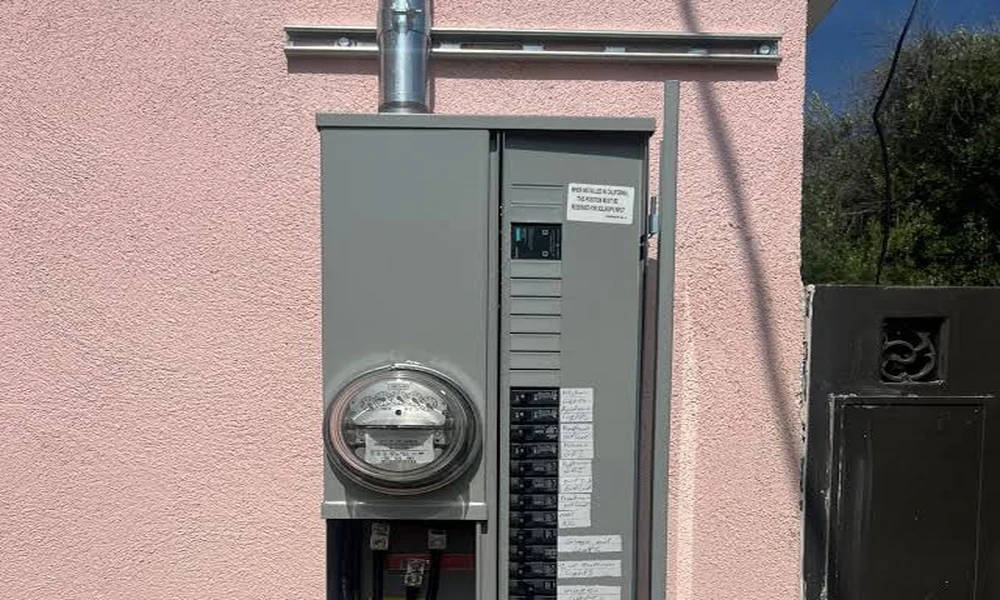
That could be a damaged service line, a failed meter base or a main breaker that has tripped or failed. It can also show up as a partial outage, where some rooms work and others don’t even though no breakers are off. In Houston’s summer heat, losing air conditioning for a night can be a health risk for older adults, infants and anyone with a medical condition. That alone can justify calling for help after hours.
Scenario Four: Water Anywhere Near Electrical Equipment
Houston knows water. Roof leaks during tropical storms, burst supply lines and street flooding all bring water into contact with outlets, panels and appliances.
If water has reached the panel or is pooling near outlets, don’t walk through it to reach the breaker box. Electricity and standing water are a dangerous combination even at household voltage. Stay out of the area and call for help. Once the water is gone, have any equipment that got wet checked before it is used again, since corrosion can cause failures long after everything looks dry.
What to Have Ready When You Call
A few details help an electrician judge urgency over the phone and arrive prepared. Before making the call, try to gather the following:
- A short description of what you noticed first, such as a smell, a sound, flickering or a tripped breaker
- Which rooms or appliances are affected and whether the rest of the house still has power
- Whether the breaker trips again right after you reset it
- The approximate age of the home and whether the panel has ever been replaced
- Any recent work, such as a new appliance, a remodel or a storm in the last few days
Scenario Five: A Breaker That Keeps Tripping
A single trip after running the microwave, toaster and coffee maker together is usually just an overloaded circuit. Unplug something, reset the breaker and move on.
A breaker that trips again immediately, trips with nothing running, or feels hot is different. It may point to a short circuit, a failing breaker or damaged wiring. Resetting it over and over is risky, because every reset sends current back into whatever fault caused the trip. Leave it off. If that circuit feeds something essential, such as a refrigerator, a medical device or the only working air conditioner, call for help that night.
Why Houston Homes Run Into These Problems
Several local factors make electrical trouble more common here than in milder climates. Air conditioners run hard for much of the year, and older panels in established neighborhoods were rarely sized for central air, EV chargers and home offices all at once. Some homes built in the mid 1960s to early 1970s still have aluminum branch wiring, which needs proper connectors to stay safe. And after events like Hurricane Beryl and the major winter freeze, many homes were left with stressed connections that were never fully inspected.
Shifting clay soil adds another layer. As the ground swells and shrinks, it can strain underground service lines and conduit, causing problems that appear months after the soil first moved.
Making Fewer Late Night Calls
The best way to avoid a midnight electrical crisis is to deal with the small signs during daylight. A flickering fixture, a warm dimmer switch or a breaker that trips now and then are easier and cheaper to fix on a weekday than at 2 a.m. Label the panel clearly, test smoke alarms regularly and keep heat producing appliances off extension cords. If the house is more than 25 years old or has never had its panel evaluated, a routine inspection is a sensible step.
Some situations will always need a call that can’t wait. Knowing which ones they are means you can act quickly when it matters and sleep easier when it doesn’t.
