

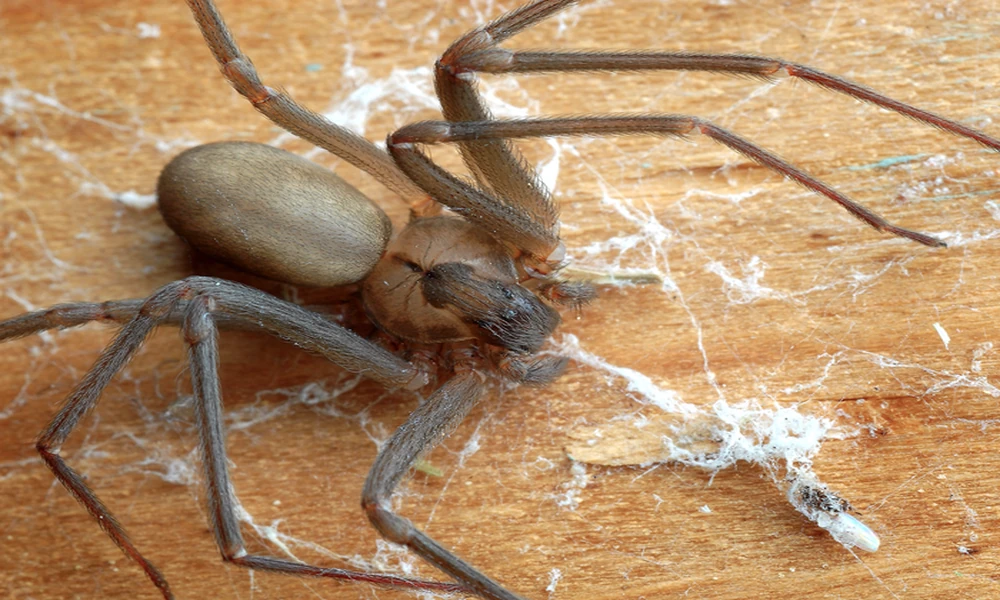
Two spiders get blamed for more than they deserve. Someone spots a fast, brown, palm-sized spider streaking across the garage floor and immediately assumes the worst. Most of the time, they’re looking at a wolf spider, which is alarming to see, but essentially harmless. Occasionally they’re looking at a brown recluse, which warrants caution. Telling the two apart is worth learning, because the response each one calls for is different. Reaching for professional spider control and extermination makes more sense once you know which spider you’re dealing with.
Start with size and movement, because that’s what you’ll notice first. A wolf spider is the bigger, bulkier of the two. It’s hairy and fast, and it hunts by chasing prey across the floor. When one darts out from under a piece of furniture, the sheer speed and heft make it look menacing. A brown recluse is smaller and more understated, with a slim body, longer thin legs, and a habit of retreating. If the spider is large, fuzzy, and bold, odds are strong it’s a wolf spider.
The Violin Marking, and Its Limits
Almost everyone has heard that a brown recluse carries a violin shape on its back, and the marking is real. Just behind the head sits a darker patch shaped like a fiddle, with the neck pointing toward the abdomen. Plenty of harmless brown spiders sport vaguely violin-ish patterns, though, and the recluse’s marking can be faint or hard to read without a close, steady look most people aren’t eager to take. Treat it as one clue among several, then, not proof on its own.
Count the Eyes if You Can Get Close
A brown recluse has six eyes, arranged in three neat pairs. A wolf spider has eight, including two large, prominent eyes that reflect light and give it that unnerving nighttime stare. You won’t count eyes on a spider sprinting across the room, but you can do so on a still one, or a clear photo.
Behavior tells you a lot as well. Wolf spiders wander in from outside looking for prey and tend to stay near the floor, usually under furniture, along baseboards, or in a basement corner. Brown recluses seek out still, undisturbed places and stay there, such as at the back of a closet, a rarely opened storage box, a stack of firewood, and the folds of clothing left hanging for a season.
Here’s the part that matters most for how you respond. A wolf spider’s bite, in the rare event it happens, amounts to little more than a bee sting and needs no special attention. A brown recluse bite is a different matter. It is often painless at first, but in some cases can develop into a slow-healing wound and warrants medical attention if the area worsens over the following days. To keep spiders in check, here are steps you can take:
Cut down clutter in garages, basements, and closets where spiders shelter.
Store seasonal items in sealed bins rather than open boxes.
Shake out shoes, gloves, and stored clothing before putting them on.
Seal gaps around doors, windows, and utility lines to limit entry.
Keep woodpiles and yard debris away from exterior walls.
When the spiders keep appearing despite your best efforts, or when you suspect a recluse has settled into the house, that’s the point to bring in help. Palisade Pest Control technicians can identify what’s present and treat the conditions drawing spiders indoors. The value isn’t just killing spiders; it’s getting a straight answer on whether the one you found warrants concern, so you’re not fumigating over a wolf spider or ignoring a recluse.
