

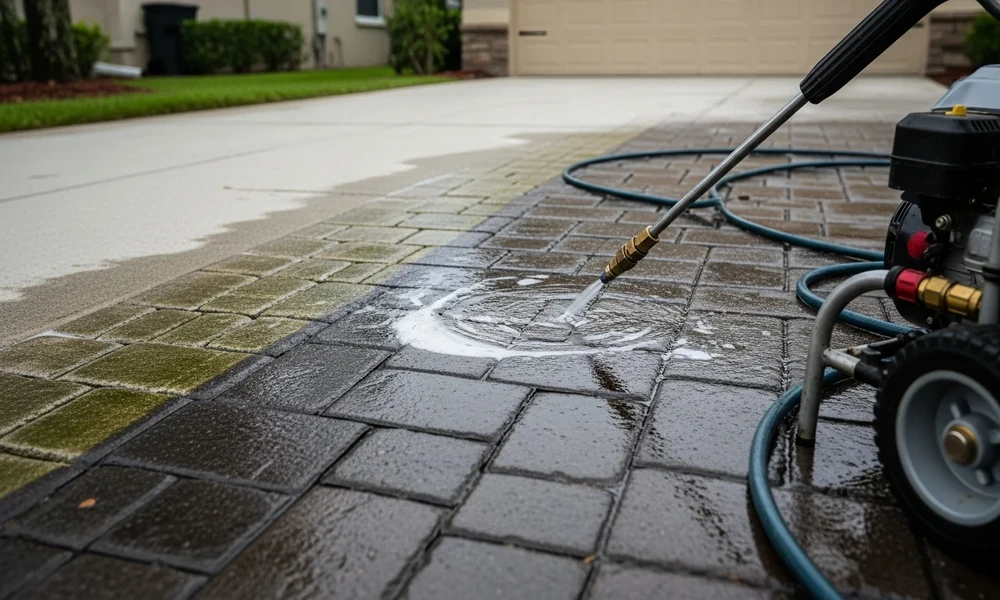
A driveway in South Florida takes a different kind of beating than one in a dry inland town. Afternoon storms leave puddles that sit for hours, sprinklers run on iron-heavy well water, and the shade from oaks and palms keeps whole strips of concrete damp long after the sun comes out. Anyone searching for Lighthouse Point pressure cleaning driveways is usually staring at a mix of problems at once: an oil spot under the car, orange marks near the irrigation heads, and a black film creeping in from the lawn edge.
Each of those stains has a different chemistry, and each driveway surface reacts to water and pressure in its own way. Salt air from the Intracoastal adds a fine film that holds dirt, and humidity rarely lets a shaded slab fully dry out. The result is that one pass with a pressure washer rarely fixes everything, and the wrong pass can leave stripes, loosened joints or a stain that spreads instead of lifting.
Exterior Cleaning is where Soft Touch Power Wash handles this kind of work, covering driveways along with patios, decks, sidewalks and screen enclosures for homes across Southeast Florida. The same licensed and insured team also runs Commercial Power Washing and Surface Cleaning for storefronts, walkways and shared entries, so the crew is used to matching pressure, cleaning solution and technique to the surface in front of them. If your concrete or pavers have started to look tired, book a driveway visit through Lighthouse Point pressure cleaning driveways and have the stains treated by type rather than blasted all at once.
1. Oil Drips Need a Degreaser Before Any Water Hits Them
Motor oil is the stain most likely to get worse with careless washing. Concrete is porous, so fresh oil wicks below the surface within hours, and plain water simply pushes the loose film outward into a wider gray halo.
- Fresh spills respond best to an absorbent like clay cat litter, ground in and left overnight before sweeping.
- Older stains need a degreaser with real dwell time, often 10 to 20 minutes, so it can break down oil inside the pores before rinsing.
- Runoff matters here because oily rinse water flowing to the street ends up in canals. UF/IFAS Extension notes that Florida keeps stormwater separate from wastewater, so anything washed into a storm drain skips the treatment plant entirely and heads toward local waterways.
2. Rust Marks Call for Acid Chemistry, Not More Pressure
Orange streaks fanning out from sprinkler heads are almost always iron from well water. Rust also shows up under metal furniture, around old gate hardware and in speckles where iron-rich fertilizer granules landed on wet concrete.
- Rust bonds to the surface chemically, so no amount of pressure will lift it on its own.
- Oxalic acid based rust removers work well on concrete and are far gentler than muriatic acid, which can etch the cream layer and leave a rough, blotchy finish.
- Colored pavers deserve a test spot first, since strong acids can lighten the dye and leave a pale patch that looks worse than the rust did.
3. Black Algae in Shaded Strips Grows Back From the Roots
The dark film along the lawn edge or under a tree canopy is usually a mix of algae, mildew and organic debris. It thrives where the slab stays damp, which in a humid coastal town can mean most of the year.
- High pressure strips the visible layer but often leaves living growth in the pores, which is why some driveways turn dark again within weeks.
- A pre-treatment with a diluted cleaning solution kills growth before the surface cleaner passes over, and a light post-treatment slows regrowth.
- Algae also makes concrete slippery, so treating walkways and the apron where people step out of cars matters for safety as much as appearance.
4. Pavers Lose Their Joint Sand When the Wand Gets Too Close
Concrete and pavers may look nearly identical from the street, but their construction determines how they respond to pressure washing. A poured concrete slab forms one continuous surface, while interlocking pavers depend on compacted bedding material and joint sand to maintain stability and distribute loads. According to the Concrete Masonry & Hardscapes Association’s pavement maintenance guidelines, excessive pressure washing can dislodge joint sand, potentially weakening the interlock between individual pavers. Using a wider spray pattern, maintaining appropriate nozzle distance, and replenishing lost joint sand help preserve the surface’s structural integrity while removing dirt, algae, and stains.
- Concrete tolerates higher pressure, especially through a rotary surface cleaner that spreads force evenly and avoids the stripes a narrow tip leaves behind.
- Pavers need lower pressure and a wider spray angle, because a direct jet into the joints washes sand out and lets weeds and ants move in.
- Expect some joint sand loss even with careful work, so plan to refill joints afterward and check for loose or rocking pavers near the edges.
5. Asphalt Softens Under Heat and Harsh Solvents
Asphalt driveways are less common in Southeast Florida, but they show up on older homes and shared drives. The binder holding asphalt together is petroleum based, which changes the rules entirely.
- Strong degreasers and solvents can dissolve the binder along with the oil stain, leaving a soft, pitted spot.
- Low pressure and cool water protect the surface, since hot water combined with summer heat can loosen aggregate.
- Asphalt also shows algae less obviously than light concrete, so growth often goes unnoticed until the surface feels slick underfoot.
6. Humid Weather Shortens the Cleaning Cycle
In a dry climate, a driveway might go two or three years between cleanings. Here, the rainy season, roughly May through October, fuels growth fast enough that the calendar looks very different.
- Sunny concrete driveways usually hold up for about a year between professional cleanings.
- Shaded slabs, north-facing aprons and anything under oaks often need attention every six months to stay ahead of algae.
- Freshly poured concrete should cure for at least 28 days before any pressure cleaning, and new pavers may show a white mineral haze that fades on its own over the first few months.
A driveway rarely needs every one of these fixes on the same day, but most need more than one. Treating oil, rust and algae by their own chemistry, choosing pressure by surface, and setting a schedule that fits the shade and rain on your lot will keep the slab clean longer and keep the runoff out of the canals that make this stretch of coast worth living on.
