

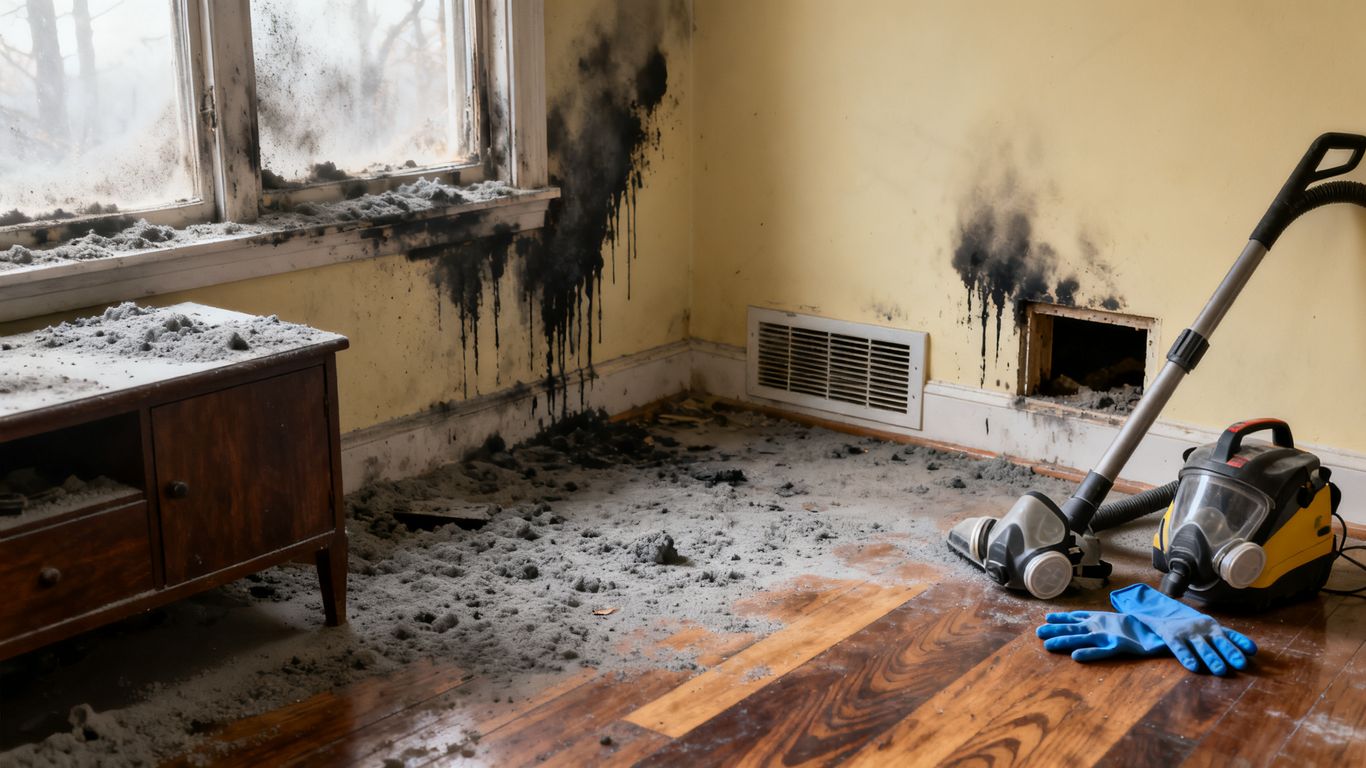
Wildfire residue is not a single, uniform substance. It can include coarse ash, fine soot, smoke particles, and traces of materials carried from both the fire and the surrounding environment. Some particles settle quickly, while others remain suspended and move through a home with normal air circulation. Understanding those differences helps explain why wildfire ash and soot damage may remain after visible dust has been removed.
How ash differs from soot and smoke residue
Ash is the pale or gray material left after vegetation, paper, wood, and other substances burn. Soot is generally darker and finer, formed by incomplete combustion and often carried in smoke. Smoke residue can also include oily films and odors that settle on surfaces without looking like ordinary dust. A room may therefore appear clean while still retaining residue in fabrics, wall coatings, or hidden edges.
Why particle size affects indoor contamination
Larger ash fragments tend to settle on floors, windowsills, and horizontal surfaces. Fine particles behave differently: they can remain airborne longer, pass through gaps around doors and windows, and enter filters or ductwork. When people walk across a contaminated floor or disturb a cushion, these particles may become airborne again. Fine residue travels farther and is often harder to locate than the visible layer near an entry point.
Chemicals and irritants that may remain after a fire
The composition of residue depends on what burned. Smoke from vegetation may mix with particles from plastics, treated wood, insulation, furnishings, vehicles, or other manufactured materials. The resulting residue may irritate the eyes, throat, skin, or lungs, particularly when it is disturbed during cleaning. Because composition varies from one fire and property to another, unusual odors or extensive contamination warrant professional assessment rather than guesswork.
How outdoor smoke enters a closed home
A closed home is not airtight. Smoke can enter through gaps around doors and windows, vents, chimneys, attic openings, crawl spaces, and mechanical systems. Pressure changes caused by exhaust fans, heating equipment, or wind can draw smoky outdoor air inside. Even a property outside the immediate burn area can develop interior contamination when smoke persists in the surrounding air.
How wildfire ash and soot damage interior surfaces
Residue affects surfaces according to both its chemistry and the material’s porosity. Smooth finishes may show staining, while porous materials can hold particles below the exposed surface. Moisture, heat, and repeated handling can make a residue film more difficult to remove. As a result, wildfire ash and soot damage is often a cleaning and preservation issue as much as a visible appearance problem.
Walls, ceilings, and painted finishes
Walls and ceilings can develop gray films, dark streaks, or uneven discoloration where smoke moved through a room. Flat paint and textured finishes may trap particles more readily than glossy coatings. Aggressive scrubbing can spread the residue, burnish the paint, or remove the finish altogether. Before repainting, the underlying surface generally needs a careful inspection and appropriate cleaning so odor and staining are not simply sealed in without treatment.
Floors, carpets, and upholstered furniture
Hard flooring may collect abrasive grit that scratches the finish when dragged by shoes or moved with a dry cloth. Carpet, rugs, sofas, and chairs can hold fine particles in their fibers, padding, and seams. Odor may persist even after surface vacuuming because smoke compounds can remain deeper in the material. Soft contents should be handled gently, especially when they have been exposed to moisture as well as ash.
Cabinets, woodwork, and other porous materials
Unfinished wood, painted cabinetry, trim, wicker, books, and similar materials can absorb smoke residue or retain it in joints and grain. Wood finishes may become dull, sticky, or discolored, while cabinet interiors may collect particles that are overlooked during ordinary surface cleaning. Repeated wiping with water can raise wood grain or drive residue into pores. The best treatment depends on the finish, age, construction, and severity of exposure.
Glass, metal, and other hard surfaces
Glass may show a hazy film, and metal can develop spotting or early corrosion when acidic or chemically active residue remains in contact with moisture. Appliances, fixtures, hardware, and electronics also have seams and openings where ash can collect. Dry wiping may scratch some finishes if gritty particles are dragged across them. Hard surfaces still benefit from a methodical approach that removes loose material before any liquid or cleaner is applied.
Room-by-room effects of wildfire residue
The same smoke event can affect rooms in different ways. Kitchens contain grease and appliances that hold residue, bedrooms contain fabrics that absorb odors, and utility areas often connect directly to ventilation or exterior openings. A room-by-room inspection helps identify both obvious deposits and pathways that could redistribute contamination. It also prevents cleaning efforts from focusing only on the spaces that look dirty.
Kitchens and areas with grease or food exposure
Grease on range hoods, cabinets, walls, and nearby appliances can make soot adhere more firmly. Smoke residue may collect on the tops of cabinets, inside exhaust components, and around refrigerator or oven seals. Food, dishes, and open containers should be evaluated for exposure rather than assumed safe because they were stored indoors. Cleaning should also account for the possibility that residue has combined with cooking oils and become a persistent film.
Bedrooms, living rooms, and soft furnishings
Bedrooms and living rooms often contain mattresses, bedding, curtains, rugs, upholstered seating, and decorative textiles. These materials can retain odor and fine particles even when the room’s hard surfaces have been wiped. Cushions and mattresses may also release residue when compressed or moved. Items used for sleeping or close bodily contact deserve particular care, especially if they have visible deposits, strong odor, or water damage.
HVAC systems, ducts, and air vents
Heating and cooling equipment can distribute particles from one room to another. Ash may settle on grilles, filters, coils, blower components, or duct surfaces, and turning on the system can disturb that material. Replacing an accessible filter may be useful, but it does not by itself establish that the entire system is clean. A qualified inspection can determine whether operation should be paused and whether duct or equipment cleaning is appropriate.
Attics, basements, garages, and storage spaces
These areas are easy to overlook because they are used less often, yet they may have direct paths to the outdoors. Attics can receive smoke through vents, basements can collect settled particles and water, and garages may contain tools, fabrics, chemicals, or stored household goods. Boxes and unfinished materials can conceal residue along their bottoms and edges. Contamination in these spaces may later migrate into living areas through air movement or regular foot traffic.
Health and indoor air quality concerns
Ash and smoke residue should be treated as a potential indoor air quality concern, not merely a cosmetic nuisance. The health effect depends on the concentration, composition, duration of exposure, and sensitivity of the person breathing the air. Disturbing settled material during sweeping, moving furniture, or opening contaminated storage can temporarily raise airborne particle levels. The safe re-entry guidance offers practical precautions for reducing exposure before cleaning begins.
Respiratory and skin irritation from ash particles
Airborne ash can irritate the nose, throat, and lungs, while contact with residue may bother the eyes or skin. People may notice coughing, scratchiness, congestion, wheezing, or discomfort after entering a contaminated space. Symptoms can arise during cleaning because particles become suspended again. A person who experiences significant or persistent symptoms should leave the area and seek medical advice.
Why children, older adults, and sensitive people face greater risks
Children may spend time close to floors and fabrics where settled particles accumulate, and they may touch surfaces before washing their hands. Older adults and people with asthma, chronic lung disease, heart disease, or other sensitivities may respond more strongly to degraded air quality. Pets can also carry residue on their fur and paws. Until cleaning and ventilation decisions have been made, vulnerable occupants are better kept away from visibly or noticeably contaminated rooms.
Lingering odors and volatile compounds
Smoke odor can remain after visible ash has been removed because odor-causing compounds may have entered porous materials. Warm temperatures, humidity, and airflow can cause those compounds to become noticeable again. Air fresheners usually mask rather than remove the source and may add another scent to the space. Persistent odor is a reason to inspect furnishings, cavities, HVAC components, and other reservoirs instead of repeatedly treating the air alone.
Signs that indoor air remains unsafe
No single visual sign can confirm that a home is safe to occupy. Recurring odor, dust that returns soon after cleaning, irritation that improves outside the property, or residue emerging from vents can all justify further evaluation. Visible ash in concealed areas and contamination of soft goods are additional warning signs. If the source or extent is unclear, residents can review smoke damage claim guidance while arranging an appropriate inspection.
Hidden and long-term wildfire ash and soot damage
The first cleaning pass rarely reveals every affected location. Particles can settle behind appliances, beneath furniture, inside cabinets, and in building cavities, while moisture can create a separate path of deterioration. Some effects become more apparent days or weeks later as odors return or corrosion develops. A careful assessment considers both what is visible now and what could continue affecting the home.
Residue behind walls, appliances, and built-ins
Smoke can move through gaps around electrical outlets, plumbing penetrations, recessed fixtures, and built-in cabinetry. Ash may collect behind refrigerators, washers, shelving, and other heavy objects that are not moved during a quick cleanup. Wall cavities and insulation can also retain odor or particles when smoke has entered through openings. These areas should not be opened casually, since disturbing concealed material can spread it through the room.
Corrosion of electrical, plumbing, and metal components
Residue that contains acidic or reactive compounds can affect exposed metal over time, particularly when humidity is present. Contacts, wiring components, fasteners, hinges, plumbing fixtures, and appliance parts may show tarnishing or corrosion. Damage inside electrical equipment may not be visible from the outside and should not be tested by an unqualified person. An electrician or other appropriate specialist may need to examine components before they are placed back into service.
Moisture, mold, and secondary damage after firefighting
Water used for suppression, roof damage, broken windows, and emergency weather exposure can leave materials damp after the smoke clears. Wet carpet, insulation, drywall, and furnishings may develop additional damage if they are not dried promptly and safely. Ash mixed with water can form a stubborn residue that spreads across floors and lower walls. Moisture assessment should proceed alongside smoke cleaning when water intrusion is suspected.
How contamination can worsen over time
Residue becomes harder to manage when it is repeatedly tracked, rubbed into surfaces, or circulated through an operating HVAC system. Humidity can intensify odor and accelerate corrosion, while delayed drying can support microbial growth. Repainting or deodorizing before the source is addressed may conceal rather than resolve the problem. Early documentation and a coordinated inspection can limit unnecessary disturbance and clarify the next steps.
How to clean wildfire ash and soot from the interior
Cleaning should begin only after the property is cleared for entry and immediate hazards have been addressed. The method must match the surface: loose ash is handled differently from an oily soot film, and porous furnishings require different decisions from glass or metal. Rushing can grind grit into finishes or send fine particles back into the air. A staged approach is usually safer and more effective than trying to make every room look normal in one pass.
Safety steps before entering or cleaning
Residents should follow local re-entry instructions and avoid entering a structure with suspected structural, electrical, gas, or fire-related hazards. Properly fitted respiratory protection, gloves, eye protection, and washable clothing can reduce contact with disturbed residue; ordinary cloth masks are not a substitute for suitable respiratory protection. Children and pets should be kept away from work areas. Before work begins, windows, doors, ventilation equipment, and air cleaners should be considered as part of an overall exposure-control plan.
Dry-cleaning methods for loose residue
Loose ash should be removed without sweeping it aggressively or blowing it through the home. A suitable vacuum equipped for fine particles can help collect material from floors and surfaces, while soft brushes and controlled movements may reduce abrasion. Dry wiping is risky on gritty deposits because it can scratch finishes and smear residue. The aim is to capture loose material first, leaving more targeted cleaning for the film that remains.
A compact sequence helps keep the work orderly:
- Isolate the affected room and limit unnecessary movement through it.
- Remove loose residue with a suitable fine-particle vacuum or other controlled method.
- Work from cleaner areas toward more contaminated areas and from higher surfaces downward.
- Change or clean tools as appropriate so residue is not transferred to unaffected rooms.
After this first pass, surfaces should be reassessed rather than assumed clean. Returning dust, odor, or discoloration can indicate that particles remain in fabrics, cavities, vents, or other reservoirs. The sequence reduces spread, but it does not replace testing or professional cleaning when contamination is extensive.
When to use damp cleaning and specialized products
Damp wiping and mopping can capture fine particles that remain after loose residue has been removed. Too much water, however, can spread soot, damage wood or drywall, or create moisture problems. Cleaning products should be selected for the specific coating and tested in an inconspicuous area before broad use. Strong solvents, chlorine products, and improvised mixtures can damage finishes or create irritating fumes, so specialized treatment is best guided by a trained professional when the residue is oily, persistent, or widespread.
Items that may need professional cleaning or disposal
Mattresses, upholstered furniture, carpeting, clothing, books, insulation, filters, and unfinished materials may require specialized evaluation. Some can be cleaned through controlled procedures, while others may retain odor or contamination beyond practical restoration. Food, medicines, cosmetics, and porous personal items exposed to substantial smoke or ash should not be kept solely because they look intact. Decisions should consider health, material condition, replacement cost, and the likelihood that cleaning will remove both residue and odor.
When to hire a wildfire restoration professional
Professional assistance is appropriate when contamination is widespread, hidden, strongly odorous, or connected to HVAC equipment and building cavities. It is also prudent when water, structural damage, electrical concerns, or vulnerable occupants are involved. A qualified restoration professional can coordinate inspection, containment, cleaning, drying, and documentation rather than treating each symptom in isolation. The goal is not simply a visibly cleaner room, but a defensible assessment of what was affected and what can be restored.
Situations that require specialized equipment
Fine-particle filtration, containment, controlled air movement, odor treatment, and specialized surface-cleaning tools may be needed for larger losses. Ordinary household vacuums and fans can redistribute residue if used without the right safeguards. Professionals may also have equipment for cleaning contents, accessing difficult areas, and drying materials after firefighting water or weather intrusion. Extensive contamination should not be handled as a routine dusting project.
How professionals test air quality and surface contamination
Testing may include visual inspection, sampling, particle assessment, odor evaluation, and examination of surfaces or HVAC components. The appropriate method depends on the suspected material, the fire exposure, and the questions that need to be answered. Testing can help distinguish a localized cleaning issue from contamination that has spread through multiple rooms. Results should be explained in plain language, with clear limits on what each test can and cannot establish.
What to document for insurance claims
Photographs and video should capture visible residue, affected rooms, damaged contents, HVAC components, water intrusion, and areas that cannot be safely accessed. Notes should include dates, odors, symptoms, cleaning attempts, emergency expenses, and conversations with insurers or contractors. Receipts and inventories can help connect individual contents to the loss. Because smoke damage may be invisible at first glance, a detailed record of inspection and testing is useful; the available claim documentation resource can help organize that process.
How to evaluate whether contents can be restored or replaced
A restoration decision should consider the material, extent of exposure, odor persistence, contamination type, cleaning cost, and expected result. Items with sentimental value may justify specialized treatment even when replacement would be cheaper, while some porous goods may not be suitable for continued use after heavy exposure. A written contents assessment can separate cleanable, questionable, and non-restorable items. The final choice should be based on documented condition and professional advice rather than appearance alone.
